
Lorem ipsum dolor sit amet, consectetur adipiscing elit. Ut elit tellus, luctus nec ullamcorper mattis, pulvinar dapibus leo.
Top 10 Underwear Manufacturing Trends For Startups in 2026
Meta Title: Top 10 Underwear Manufacturing Trends For Startups in 2026
Meta Description: Discover the top 10 underwear manufacturing trends for startups in 2026. Learn about sustainable fabrics, smart manufacturing, customization, and innovative production techniques.
Focus Keyword: Underwear Manufacturing Trends For Startups
Top 10 Underwear Manufacturing Trends For Startups in 2026
The men’s underwear market is evolving rapidly, creating exciting opportunities for new brands and startups. As consumer preferences shift toward comfort, sustainability, performance, and personalization, underwear manufacturers are adopting innovative technologies and production methods to stay competitive.
For entrepreneurs planning to launch an underwear brand, understanding the latest underwear manufacturing trends can help create products that meet modern customer expectations while maximizing profitability.
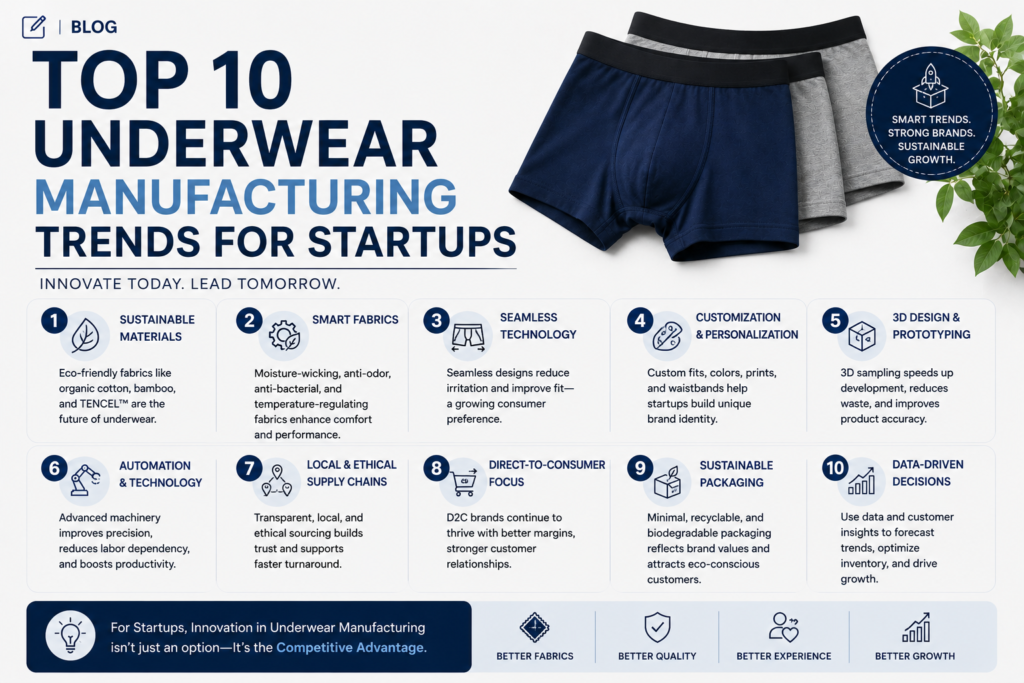
In this article, we’ll explore the Top 10 Underwear Manufacturing Trends For Startups in 2026 and how these trends can help your brand stand out in a competitive marketplace.
1. Sustainable and Eco-Friendly Fabrics
Sustainability is no longer a luxury—it has become a necessity. Modern consumers actively seek brands that prioritize environmentally responsible manufacturing.
Popular sustainable underwear fabrics include:
- Organic Cotton
- Bamboo Fabric
- Recycled Polyester
- Modal
- Tencel™ Lyocell
These materials offer excellent breathability, softness, and durability while reducing environmental impact.
Benefits for Startups
- Attract eco-conscious customers
- Build a premium brand image
- Improve customer loyalty
- Meet global sustainability standards
Brands adopting sustainable underwear manufacturing practices often gain a competitive advantage in both domestic and international markets.
2. Moisture-Wicking Performance Fabrics
Consumers today expect underwear to perform beyond basic comfort. Moisture-wicking fabrics are becoming increasingly popular among fitness enthusiasts, professionals, and travelers.
Performance fabrics help:
- Keep the body dry
- Reduce sweat buildup
- Prevent skin irritation
- Improve comfort during long wear
Many startups are incorporating fabric blends containing:
- Spandex
- Microfiber
- Nylon
- Polyester Performance Fibers
These materials enhance flexibility and support while maintaining breathability.
3. Seamless Underwear Technology
Seamless underwear manufacturing is one of the fastest-growing trends in the industry.
Traditional stitching can create discomfort and visible lines under clothing. Seamless production technology eliminates these issues.
Advantages
- Superior comfort
- Better fit
- Reduced chafing
- Premium appearance
- Modern design appeal
For startups targeting premium and luxury underwear segments, seamless products offer significant market potential.
4. Customization and Personalization
Consumers increasingly want products that reflect their personality and preferences.
Modern underwear startups are introducing:
- Custom colors
- Personalized waistbands
- Monogrammed designs
- Limited edition collections
- Customized packaging
Personalization creates a stronger emotional connection between customers and brands.
Why It Matters
Customized underwear products typically command higher profit margins and encourage repeat purchases.
5. Small MOQ Manufacturing
One of the biggest challenges for startups has traditionally been high minimum order quantities (MOQs).
Fortunately, many manufacturers now offer:
- Low MOQ production
- Small batch manufacturing
- Private label services
- Flexible inventory management
This trend allows startups to:
- Test designs quickly
- Reduce financial risk
- Launch with lower investment
- Adapt to market demand faster
For new underwear brands, low MOQ manufacturing can significantly reduce startup costs.
6. Smart Manufacturing and Automation
The underwear manufacturing industry is increasingly embracing automation and smart factory solutions.
Advanced technologies include:
- Automated cutting systems
- Digital pattern making
- AI-driven quality control
- Robotic sewing assistance
- Real-time production monitoring
Benefits
- Improved production efficiency
- Reduced labor costs
- Consistent product quality
- Faster order fulfillment
Startups partnering with technologically advanced manufacturers can achieve better scalability and operational efficiency.
7. Direct-to-Consumer (DTC) Production Models
The rise of e-commerce has transformed how underwear brands operate.
Many startups now use Direct-to-Consumer (DTC) manufacturing models that eliminate unnecessary middlemen.
Advantages
- Higher profit margins
- Better customer relationships
- Faster feedback collection
- Improved brand control
- Lower distribution costs
Combining DTC strategies with digital marketing enables startups to compete effectively with larger established brands.
8. Antibacterial and Odor-Resistant Fabrics
Modern consumers increasingly value hygiene-focused apparel.
Manufacturers are introducing fabrics treated with antibacterial technologies that help:
- Prevent bacterial growth
- Reduce unpleasant odors
- Improve freshness
- Enhance overall comfort
These features are especially attractive for:
- Athletes
- Travelers
- Office professionals
- Active lifestyle consumers
Premium underwear brands can leverage these benefits as strong selling points.
9. Premium Packaging and Unboxing Experiences
Packaging has become an essential component of brand identity.
Today’s successful underwear startups invest heavily in:
- Luxury packaging
- Eco-friendly boxes
- Branded tissue paper
- Custom inserts
- Premium labels
Why Packaging Matters
A memorable unboxing experience can:
- Increase customer satisfaction
- Encourage social media sharing
- Improve perceived product value
- Strengthen brand recognition
For startups, premium packaging often provides a competitive edge without significantly increasing production costs.
10. Data-Driven Product Development
The most successful underwear startups rely on customer data to guide product decisions.
Brands are using:
- Customer reviews
- Website analytics
- Social media insights
- Market research
- Purchase behavior analysis
This data helps manufacturers and startups understand:
- Preferred styles
- Popular fabric choices
- Size demand trends
- Color preferences
- Emerging consumer needs
Business Benefits
Data-driven product development reduces guesswork and increases the likelihood of launching successful products.
How Startups Can Capitalize on These Trends
Launching an underwear brand in 2026 requires more than simply manufacturing products. Startups must focus on innovation, customer experience, and operational efficiency.
Consider the following strategies:
Choose the Right Manufacturing Partner
Look for manufacturers offering:
- Low MOQ requirements
- Private label services
- Quality certifications
- Sustainable production capabilities
Invest in Brand Building
Develop:
- Professional branding
- Premium packaging
- Strong online presence
- Social media marketing campaigns
Focus on Product Quality
Customers are willing to pay more for underwear that delivers:
- Comfort
- Durability
- Breathability
- Performance
Leverage Digital Marketing
Use:
- SEO
- Social media advertising
- Influencer partnerships
- Email marketing
- Content marketing
A strong digital strategy can significantly accelerate brand growth.
Future Outlook of the Underwear Manufacturing Industry
The global underwear market is expected to continue growing as consumers demand higher-quality, more sustainable, and technologically advanced products.
Key future developments may include:
- Smart textiles
- Temperature-regulating fabrics
- AI-powered design systems
- Circular manufacturing processes
- Fully customizable underwear collections
Startups that embrace innovation early will be better positioned to capture market share and establish long-term success. If want to Buy The Product Contect Us
Conclusion
The underwear industry offers tremendous opportunities for entrepreneurs willing to adapt to changing consumer expectations. From sustainable fabrics and seamless technology to personalization and smart manufacturing, these trends are reshaping the future of underwear production.
By understanding and implementing these Top 10 Underwear Manufacturing Trends For Startups, new brands can create high-quality products, build customer loyalty, and compete effectively in a rapidly evolving marketplace.
Whether you’re launching a private-label men’s underwear brand or developing a premium lifestyle label like Devil’s Rags, staying ahead of manufacturing trends can be the key to long-term growth and profitability.